Aging in Place in Montgomery County: Free Home Accessibility Repairs and Tax Credits

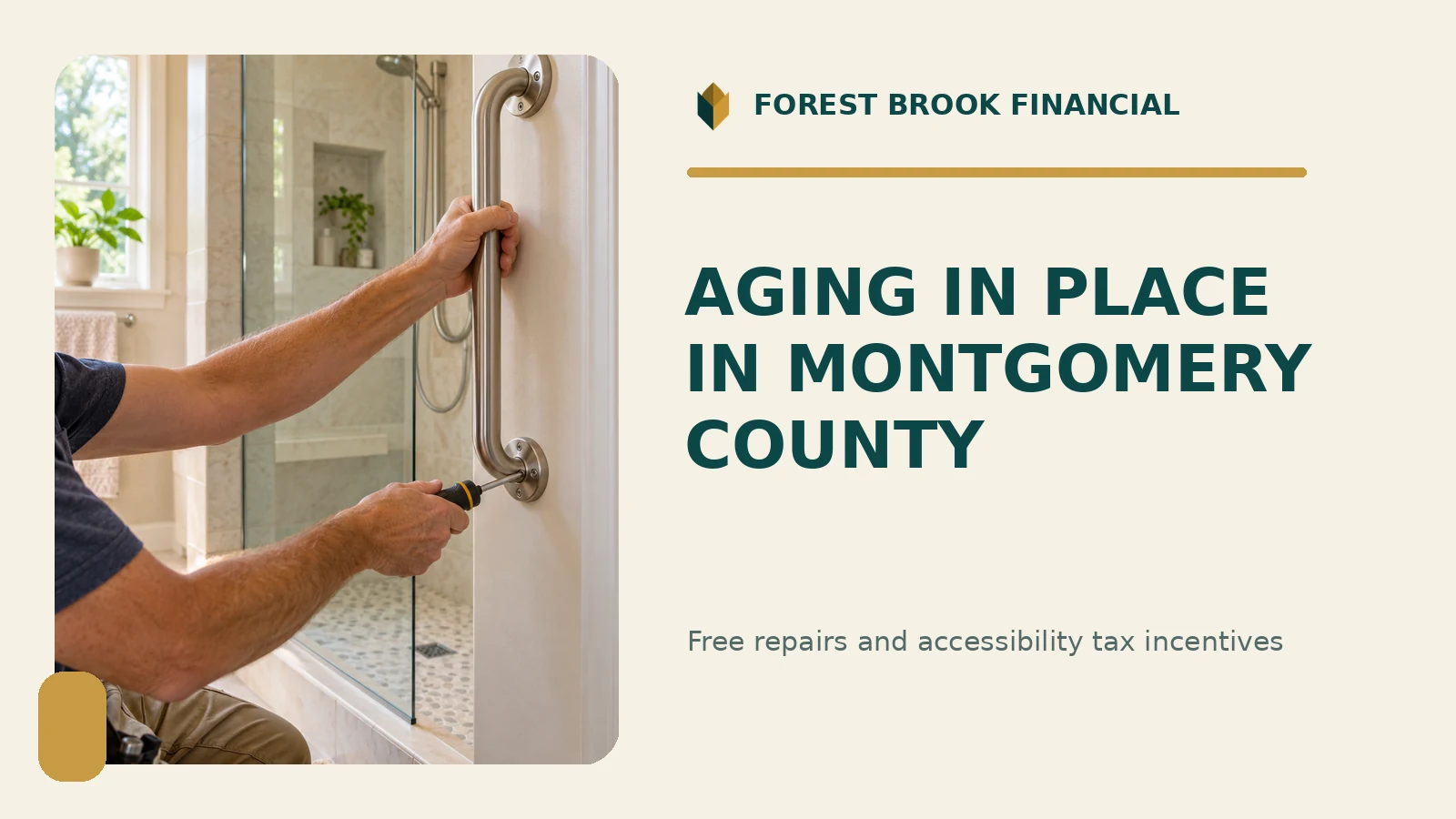
If stairs, a bathtub, or a narrow doorway is making home harder to use, Montgomery County homeowners may have two practical paths: free accessibility work through HARP or a property-tax incentive through Design for Life. I’ll show you which program fits which situation and what to prepare before you apply.
These are county programs, not insurance benefits. That distinction matters because the eligibility rules, application steps, and financial help are very different.
Start with the right Montgomery County program
HARP: free accessibility work for eligible homeowners
The Home Accessibility Rehabilitation Program (HARP) pays for approved renovations that help an older adult or a person with a disability use the home more safely. Montgomery County lists the program as free for eligible households.
The county says an applicant must live in Montgomery County, own and occupy the home for at least one year, and have at least one permanent household member who is 65 or older or has a disability. The household must also meet the program’s income limit, have a current mortgage, and carry current homeowners insurance. Because income figures can change, I would use the current chart on the county page instead of relying on an older dollar amount.
HARP can address much more than a single grab bar. The county lists no-step entrances, ramps, wider doors, railings, stairlifts, ceiling lifts, roll-in or walk-in showers, tub cuts, comfort-height toilets, accessible kitchens, easier door hardware, and smart lighting or controls among possible improvements. Approval depends on the home assessment and the program’s review; the list is not a promise that every requested project will be funded.
The county says HARP is administered by Rebuilding Together Montgomery County and Habitat for Humanity Metro Maryland. For questions, residents can email DHCAHARP@MontgomeryCountyMD.gov or call 311. The county page also lists Rebuilding Together at 301-947-9400 and Habitat at 301-990-0014, extension 19.
Design for Life: a tax incentive for qualifying improvements
Montgomery County’s Design for Life program works differently. It is a property-tax incentive for qualifying accessibility features or accessible design. It is not a free-repair program, so the homeowner generally needs to plan and pay for the work while following the county’s permit and documentation process.
The program has three levels. The Accessible Feature level covers qualifying permanent features installed at a principal residence. Level I, called VISITable, focuses on basic access for single-family homes, townhouses, and duplexes. Level II, called LIVEable, uses broader accessibility standards for those same housing types.
Before signing a contract or starting work, I would contact the Department of Permitting Services through 311, or 240-777-0311 from outside Montgomery County. The county’s process calls for permit and inspection steps, followed by a tax-credit application with supporting records such as contracts, receipts, invoices, and the required affidavit. Confirm the current rules and incentive amount for your project rather than assuming an older online figure still applies.
HARP or Design for Life: which is the better starting point?
Start with HARP if you need accessibility work and may meet the age or disability, owner-occupancy, income, mortgage, and insurance requirements. The central question is whether the household qualifies for free approved modifications.
Start with Design for Life if you are planning and financing an accessibility project and want to find out whether the design may qualify for a county property-tax incentive. The central question is whether the work and permitting process meet the county’s standards.
Some homeowners may want to ask about both. Do that before construction begins. HARP providers need to evaluate program eligibility and the home, while Design for Life has its own permit, inspection, and documentation requirements. Starting work first can leave you without records or approvals a program expects.
A short preparation checklist
1. Confirm ownership and occupancy. Note when you began owning and living in the home, and whether it is your principal residence.
2. Identify the daily barrier. Be specific: steps at the entrance, a tub that is hard to cross, a doorway that is too narrow, or controls that are difficult to reach.
3. Gather HARP eligibility documents. Be ready to document the qualifying resident’s age or disability, household income, mortgage status, and homeowners insurance. Let the program tell you exactly which records it requires.
4. Take clear photos and measurements. They help explain the problem, but do not treat them as a substitute for a professional assessment.
5. For Design for Life, preserve every project record. Keep proposed plans, contracts, receipts, invoices, permit information, and inspection documents together.
6. Ask what happens next. Confirm who inspects the home, whether work can begin, what costs are your responsibility, and whether funding or a tax credit has actually been approved.
If you rent or HARP is not a fit
HARP’s published rules are for owner-occupied homes, so renters should not assume they qualify. A useful starting point is Montgomery County’s Aging and Disability Resource Unit at 240-777-3000. The unit helps residents navigate county services and can point to the appropriate program; it does not guarantee that a structural modification will be available.
If the bigger problem is help with daily activities rather than construction, ask the Resource Unit about home-care and senior-support programs. Caregivers may also find my guide to respite care in Montgomery County useful. If getting to appointments or community programs is the barrier, use the Montgomery County senior transportation guide.
The simplest next step
Use the checklist above to describe the exact barrier in the home, then open the county HARP page or call 311 and ask which pathway should review the project before any work begins. That one conversation can help you avoid applying to the wrong program or starting a project before required approvals are in place.


Comments